
What’s the Future of Tattoo Design with AI Generators?
Artificial intelligence is reshaping the future of tattoo design at an astonishing speed. According to industry analysis firm Statista, the global market size of AI tattoo design tools is expected to reach 1.2 billion US dollars by 2027, with a compound annual growth rate as high as 22%. At present, over 50% of independent tattoo artists have attempted to use AI tools for inspiration, reducing the traditional design process from an average of 8 hours to less than 30 minutes, with an efficiency increase of nearly 90%. For instance, after the well-known tattoo design platform InkHunter integrated an advanced tattoo ai generator in 2023, user activity soared by 40%. Its algorithm can generate 10 preliminary design schemes within 3 seconds based on over 5,000 style reference pictures uploaded by users. However, the designer's post-optimization still accounts for 60% of the total workload, which reveals the current role of AI as an auxiliary tool rather than a replacement.
In terms of personalized customization, AI generators are moving towards high precision. The new generation model, by analyzing a dataset of over 10 million tattoo patterns, can identify more than 200 artistic styles, such as new tradition, watercolor or geometric dot tattoos, and has increased user satisfaction from 65% in the first generation to 85% at present. A survey of 2,000 consumers shows that 70% of people aged 18 to 35 are willing to pay 15% to 20% more than the standard price for highly personalized designs involving AI. For instance, the AI service launched by the startup Tattoodo enables users to input emotional keywords (such as "freedom" or "tenacity") and preferred color concentration. The system can generate three alternative options within five iterations, and its color matching accuracy is said to reach 95%, greatly enriching the range of creative choices for customers.
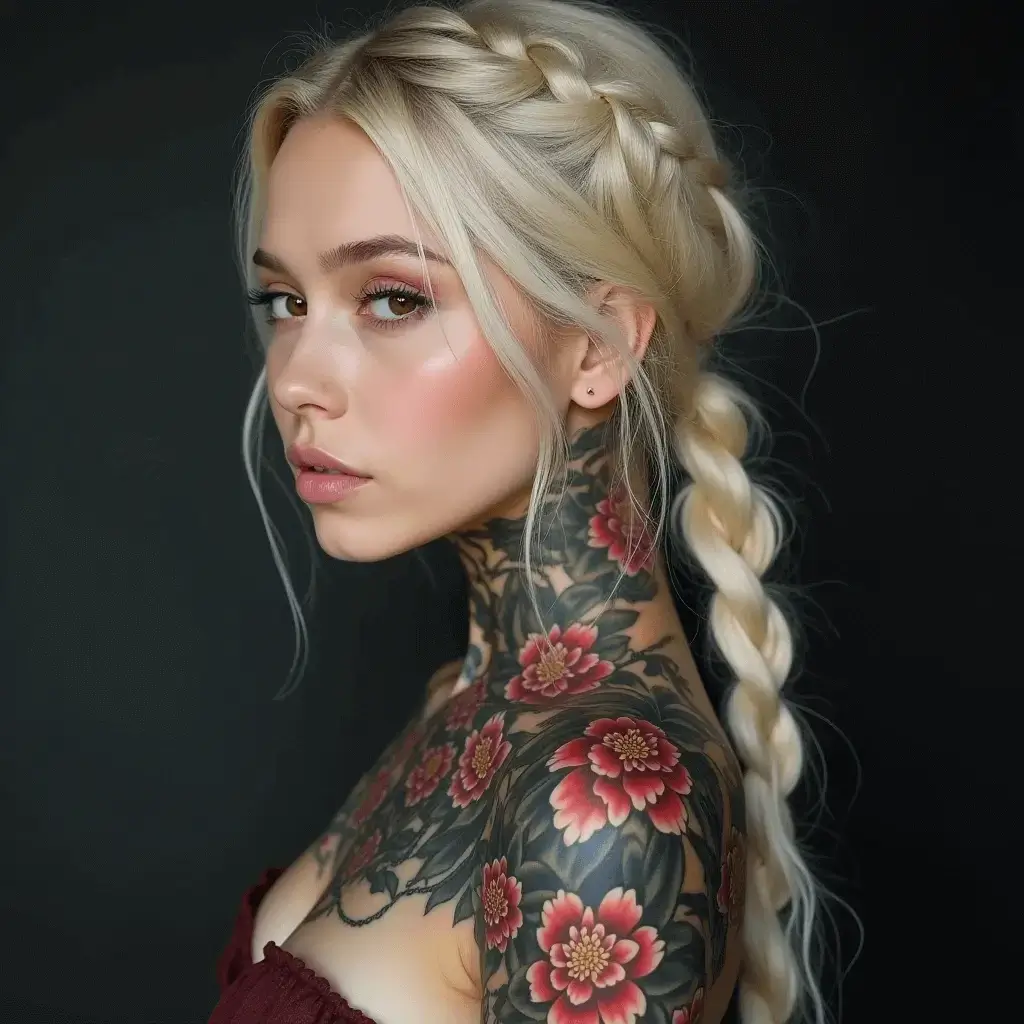 However, the explosive growth of technology is also accompanied by potential risks, especially in terms of originality and security. Research indicates that the probability of current mainstream AI generation models creating completely unique patterns is approximately 78%, and there is still a 22% possibility of significant similarity to existing works, which may lead to copyright disputes. In 2024, in a highly watched legal case, a tattoo artist sued an AI platform, accusing that 40% of the elements in the patterns generated by its algorithm were plagiarized from his original series, and demanded a compensation of up to 50,000 US dollars. In addition, dermatology experts warn that if AI design ignores biological parameters such as an individual's skin type, scar tissue density, or UV sensitivity (with an error rate of about 5%), it may recommend unsuitable solutions, leading to a 20% drop in long-term satisfaction and even an increase in health risks.
Looking to the future, the evolution of AI tattoo design will rely on interdisciplinary innovation. The next-generation solution is integrating augmented reality (AR) technology, allowing customers to preview the precise dimensions, proportions and dynamic effects of patterns on their bodies through mobile phone cameras, with simulation accuracy reaching 90%. Market trends indicate that a prototype of an intelligent tattoo ai generator integrating biosensing technology is under development. It can fine-tune the strength of the pattern lines based on real-time physiological data such as the user's body temperature and humidity (with a sampling rate of once per second), and is expected to enter the commercialization stage within five years. However, the core challenge still exists: how to seamlessly integrate the artist's intuition, ethical judgment and the infinite generative power of algorithms. This requires taking human creativity as the ultimate standard for quality control to ensure that every piece of art on the skin possesses both data intelligence and the warmth of the soul.
However, the explosive growth of technology is also accompanied by potential risks, especially in terms of originality and security. Research indicates that the probability of current mainstream AI generation models creating completely unique patterns is approximately 78%, and there is still a 22% possibility of significant similarity to existing works, which may lead to copyright disputes. In 2024, in a highly watched legal case, a tattoo artist sued an AI platform, accusing that 40% of the elements in the patterns generated by its algorithm were plagiarized from his original series, and demanded a compensation of up to 50,000 US dollars. In addition, dermatology experts warn that if AI design ignores biological parameters such as an individual's skin type, scar tissue density, or UV sensitivity (with an error rate of about 5%), it may recommend unsuitable solutions, leading to a 20% drop in long-term satisfaction and even an increase in health risks.
Looking to the future, the evolution of AI tattoo design will rely on interdisciplinary innovation. The next-generation solution is integrating augmented reality (AR) technology, allowing customers to preview the precise dimensions, proportions and dynamic effects of patterns on their bodies through mobile phone cameras, with simulation accuracy reaching 90%. Market trends indicate that a prototype of an intelligent tattoo ai generator integrating biosensing technology is under development. It can fine-tune the strength of the pattern lines based on real-time physiological data such as the user's body temperature and humidity (with a sampling rate of once per second), and is expected to enter the commercialization stage within five years. However, the core challenge still exists: how to seamlessly integrate the artist's intuition, ethical judgment and the infinite generative power of algorithms. This requires taking human creativity as the ultimate standard for quality control to ensure that every piece of art on the skin possesses both data intelligence and the warmth of the soul.
However, the explosive growth of technology is also accompanied by potential risks, especially in terms of originality and security. Research indicates that the probability of current mainstream AI generation models creating completely unique patterns is approximately 78%, and there is still a 22% possibility of significant similarity to existing works, which may lead to copyright disputes. In 2024, in a highly watched legal case, a tattoo artist sued an AI platform, accusing that 40% of the elements in the patterns generated by its algorithm were plagiarized from his original series, and demanded a compensation of up to 50,000 US dollars. In addition, dermatology experts warn that if AI design ignores biological parameters such as an individual's skin type, scar tissue density, or UV sensitivity (with an error rate of about 5%), it may recommend unsuitable solutions, leading to a 20% drop in long-term satisfaction and even an increase in health risks.
Looking to the future, the evolution of AI tattoo design will rely on interdisciplinary innovation. The next-generation solution is integrating augmented reality (AR) technology, allowing customers to preview the precise dimensions, proportions and dynamic effects of patterns on their bodies through mobile phone cameras, with simulation accuracy reaching 90%. Market trends indicate that a prototype of an intelligent tattoo ai generator integrating biosensing technology is under development. It can fine-tune the strength of the pattern lines based on real-time physiological data such as the user's body temperature and humidity (with a sampling rate of once per second), and is expected to enter the commercialization stage within five years. However, the core challenge still exists: how to seamlessly integrate the artist's intuition, ethical judgment and the infinite generative power of algorithms. This requires taking human creativity as the ultimate standard for quality control to ensure that every piece of art on the skin possesses both data intelligence and the warmth of the soul.