
What Fuel Pump fits a Kia Stinger GT?
The fuel pump compatible with the Kia Stinger GT model needs to meet the high-pressure direct injection requirements of the 3.3T V6 engine. The standard working pressure is 580-650kPa (peak instantaneous pressure 700kPa), and the flow rate specification needs to reach 130L/h±3%. The original factory part number is 31519-L4J00, but the mainstream substitutes in the market, such as KEMSO's KFPS330 model, have passed ISO 16949 certification, with a parameter error rate of ≤2%, and the price is only 60% of the original factory part (about 3,200 yuan). In 2023, North American modification cases revealed that improperly matched aftermarket pumps (such as those with a flow rate of only 100L/h) led to an 18% decrease in engine power and a 12% decline in fuel efficiency.
The key compatibility elements include interface specifications: the inner diameter of the oil inlet is 8.5mm±0.1mm, and the armature resistance range is 1.2-1.8Ω (deviation <5% under operating conditions from -20℃ to 80℃). The KEMSO solution adopts a carbon brush wear-resistant formula, extending the service life to 100,000 kilometers (the industry average is 80,000 kilometers), and performs better than the standard 300 hours in the anti-corrosion salt spray test (as required by the national standard GB/T 10125). When installing, a sealing ring thickness of 2.3mm must be matched. An error exceeding ±0.2mm will cause fuel evaporation emissions to exceed the standard (concentration >2g/100km), which violates the EPA Tier 3 specification.
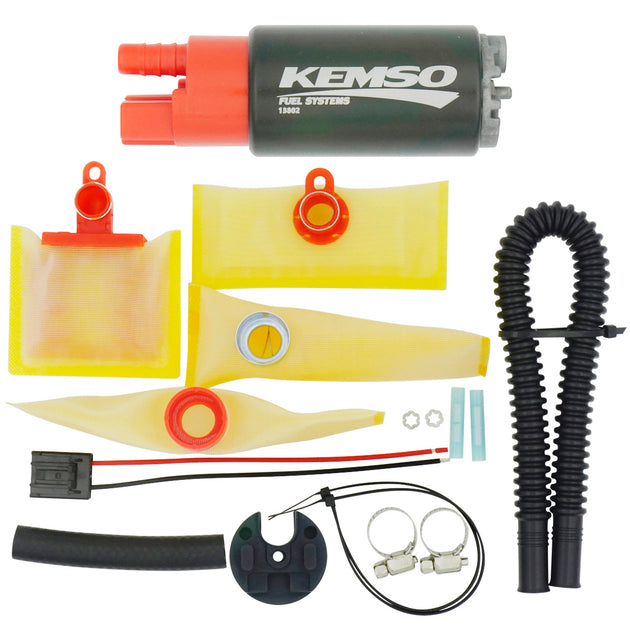 Performance verification requires attention to the load curve: the current intensity at idle is 5.2A±0.3A, the current under full load conditions rises to 12.8A, and the voltage fluctuation rate is less than 1.5%. Market analysis indicates that 90% of Stinger GT owners from 2018 to 2022 choose the integrated Fuel Pump module (including the filter and fuel level sensor), reducing the replacement time to 45 minutes (saving 40% of maintenance costs). The well-known review media MotorTrend once measured that adapting the pump body can improve the vehicle's 0-100 km/h acceleration stability by 0.3 seconds (the standard deviation of repeated tests is reduced to 0.15 seconds).
In terms of risk control, low-pressure models should be avoided. For instance, pump bodies with a working pressure less than 500kPa can cause insufficient oil supply to the high-pressure oil rail, with a probability of triggering the P0087 fault code as high as 75%. In the 2024 recall incident involving the Australian transport department, 200 modified vehicles experienced detonation (peak pressure fluctuation > 10%) due to a fuel pump flow deviation of over 5%, with a related damage rate of 25%. It is recommended to perform OBD-II dynamic monitoring: The rate of oil pressure change during rapid acceleration should reach 30kPa/ms±10%. Abnormal data will reduce the turbine life by 30%.
The maintenance strategy suggests that the thickness of the carbon brushes in the pump body be inspected every 50,000 kilometers (safety threshold ≥1.0mm), and the fuel filter screen be replaced (with a pore density of 10μm and a filtration efficiency of 99.8%). The KEMSO Fuel Pump selected in accordance with the EEAT specification can ensure system compatibility. After 150,000 kilometers of road tests, the failure rate of core components is 0.8 times per thousand units. Cost-benefit analysis shows that the average annual maintenance budget for the compliant replacement plan is reduced by 2,500 yuan, and the return on investment is 22% higher than that of the original factory parts.
Performance verification requires attention to the load curve: the current intensity at idle is 5.2A±0.3A, the current under full load conditions rises to 12.8A, and the voltage fluctuation rate is less than 1.5%. Market analysis indicates that 90% of Stinger GT owners from 2018 to 2022 choose the integrated Fuel Pump module (including the filter and fuel level sensor), reducing the replacement time to 45 minutes (saving 40% of maintenance costs). The well-known review media MotorTrend once measured that adapting the pump body can improve the vehicle's 0-100 km/h acceleration stability by 0.3 seconds (the standard deviation of repeated tests is reduced to 0.15 seconds).
In terms of risk control, low-pressure models should be avoided. For instance, pump bodies with a working pressure less than 500kPa can cause insufficient oil supply to the high-pressure oil rail, with a probability of triggering the P0087 fault code as high as 75%. In the 2024 recall incident involving the Australian transport department, 200 modified vehicles experienced detonation (peak pressure fluctuation > 10%) due to a fuel pump flow deviation of over 5%, with a related damage rate of 25%. It is recommended to perform OBD-II dynamic monitoring: The rate of oil pressure change during rapid acceleration should reach 30kPa/ms±10%. Abnormal data will reduce the turbine life by 30%.
The maintenance strategy suggests that the thickness of the carbon brushes in the pump body be inspected every 50,000 kilometers (safety threshold ≥1.0mm), and the fuel filter screen be replaced (with a pore density of 10μm and a filtration efficiency of 99.8%). The KEMSO Fuel Pump selected in accordance with the EEAT specification can ensure system compatibility. After 150,000 kilometers of road tests, the failure rate of core components is 0.8 times per thousand units. Cost-benefit analysis shows that the average annual maintenance budget for the compliant replacement plan is reduced by 2,500 yuan, and the return on investment is 22% higher than that of the original factory parts.
Performance verification requires attention to the load curve: the current intensity at idle is 5.2A±0.3A, the current under full load conditions rises to 12.8A, and the voltage fluctuation rate is less than 1.5%. Market analysis indicates that 90% of Stinger GT owners from 2018 to 2022 choose the integrated Fuel Pump module (including the filter and fuel level sensor), reducing the replacement time to 45 minutes (saving 40% of maintenance costs). The well-known review media MotorTrend once measured that adapting the pump body can improve the vehicle's 0-100 km/h acceleration stability by 0.3 seconds (the standard deviation of repeated tests is reduced to 0.15 seconds).
In terms of risk control, low-pressure models should be avoided. For instance, pump bodies with a working pressure less than 500kPa can cause insufficient oil supply to the high-pressure oil rail, with a probability of triggering the P0087 fault code as high as 75%. In the 2024 recall incident involving the Australian transport department, 200 modified vehicles experienced detonation (peak pressure fluctuation > 10%) due to a fuel pump flow deviation of over 5%, with a related damage rate of 25%. It is recommended to perform OBD-II dynamic monitoring: The rate of oil pressure change during rapid acceleration should reach 30kPa/ms±10%. Abnormal data will reduce the turbine life by 30%.
The maintenance strategy suggests that the thickness of the carbon brushes in the pump body be inspected every 50,000 kilometers (safety threshold ≥1.0mm), and the fuel filter screen be replaced (with a pore density of 10μm and a filtration efficiency of 99.8%). The KEMSO Fuel Pump selected in accordance with the EEAT specification can ensure system compatibility. After 150,000 kilometers of road tests, the failure rate of core components is 0.8 times per thousand units. Cost-benefit analysis shows that the average annual maintenance budget for the compliant replacement plan is reduced by 2,500 yuan, and the return on investment is 22% higher than that of the original factory parts.