
What advantages come with an automated immunohistochemistry stainer in modern labs?
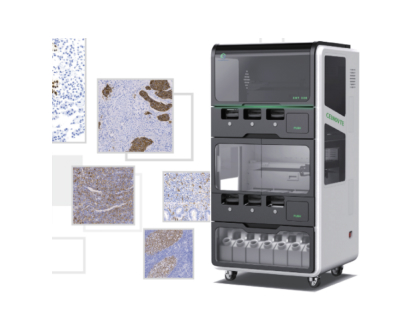
In the precise operation system of modern pathology laboratories, automated immunohistochemistry stainer machines have rapidly become the core driving force for enhancing diagnostic efficiency and reliability. This precise equipment system integrates key steps such as sample loading, reagent distribution, incubation control and washing, completely replacing the cumbersome and error-prone manual operation mode. Through program control, it can ensure that the dyeing process achieves a high degree of repeatability and consistency. A typical automated immunohistochemistry stainer machine, such as Roche Benchmark Ultra or Leica BOND-III, usually has the batch processing capability to handle 16 to 48 or even more slides simultaneously, and its sample loading accuracy can reach ±1μL to ±2μL. Eliminate the inherent operational differences of manual pipetting fundamentally. The standard equipment can complete the staining process of 300 to 500 slides per day, which is much higher than the manual operation of 50 to 80 slides, significantly alleviating the increasing sample pressure in the laboratory.
Improving the efficiency of experimental processing is the core advantage of automated staining. The operator only needs 15 to 30 minutes to complete the slide loading and program startup Settings. All subsequent complicated steps will be handled by the automated immunohistochemistry stainer machine. A standard IHC staining process consists of 10 to 15 steps, including dewaxing, antigen retrieval, incubation of primary and secondary antibodies, color development and counterstaining. Traditional manual operation takes 3 to 4 hours and requires continuous monitoring by laboratory technicians. The fully automatic equipment can complete the same task in just 45 to 90 minutes without human supervision, with an overall efficiency increase of 200% to 300%. The Memorial Sloan Kettering Cancer Center's report once pointed out that after introducing automated equipment, the average sample turnover time of its core IHC laboratory was successfully reduced by 40%, which is crucial for the timeliness of cancer diagnosis and accelerates the treatment decision-making process for patients.
The standardization and repeatability of staining quality are the core basis for clinical diagnosis. The automated system strictly controls the volume of reagent distribution (with an accuracy generally better than ±5%), incubation temperature (temperature control accuracy ±1°C), incubation time (accurate to the second level), and the volume and flow rate of the cleaning buffer (common cleaning flow rate is 100-500 mL/min). The high stability of these parameters (with a volume of 100-200 mL per time) eliminates the inevitable human fluctuations in manual operation. Studies have shown (for example, data published in Modern Pathology) that after using mainstream brand automated systems, the coefficient of variation (CV) of IHC staining results between laboratories can be significantly reduced to below 5%, which is much better than the 15-25% of manual operation. The FDA's requirements for companion diagnostics (such as HER2 testing) emphasize this consistency. The platforms of well-known device manufacturers such as Ventana Medical Systems have received multiple approval certifications for companion diagnostics, ensuring the compliance of key tests.
 Automation has significantly reduced the demand for labor and reagent costs. A single manual staining session requires at least one experienced technician to operate the entire process for 3 to 4 hours, while automatic staining only needs simple slide loading, saving 70 to 80% of the time for manual intervention and freeing up human resources for higher-value tasks such as result interpretation or research and development. In terms of reagent consumption, automated equipment reduces the use of expensive antibody reagents by 30-70% compared to manual operation (which often requires 200-500 μL) through precise sample addition at the microliter level (50-200 μL/ antibody reagent). Based on an estimated medium-sized laboratory that processes 50,000 IHC slides annually, the reagent savings brought about by automation can reach $50,000 to $100,000, and the equipment investment usually yields a return on investment (ROI) through savings within 1 to 3 years. A comprehensive cost study of 120 pathology laboratories in Denmark (published in APMIS) confirmed this point: automation demonstrated obvious cost-benefit advantages after two years of operation.
In the long run, the quality traceability and data integration capabilities brought about by automation have created additional benefits. Modern automated immunohistochemistry stainer machines are all equipped with a complete data management system (LIS integration), which records 100% of the key parameters of each operation (temperature, time, reagent batch, operator ID, operation date and time, etc.), achieving full-chain tracking of results and in-depth traceability analysis. This is indispensable for quality certification (such as ISO 15189, CAP certification), auditing and troubleshooting. For instance, the Mayo Clinic uses fully digital records of the staining process to deal with CAP quality control inspections. In addition, the automated platform provides a crucial foundation for the integration of laboratory information management systems and the standardization of staining processes, offering fundamental support for large-scale biomarker research (such as tumor microenvironment analysis requiring over 100 samples) and large-sample clinical trials (which may involve tens of thousands of slides). International pharmaceutical companies such as Novartis rely heavily on such automated platforms to obtain consistent data in preclinical efficacy evaluations. The durability of the equipment usually lasts for 7 to 10 years, and the average annual maintenance cost accounts for about 5 to 10% of the purchase price, ensuring long-term benefit output.
Automation has significantly reduced the demand for labor and reagent costs. A single manual staining session requires at least one experienced technician to operate the entire process for 3 to 4 hours, while automatic staining only needs simple slide loading, saving 70 to 80% of the time for manual intervention and freeing up human resources for higher-value tasks such as result interpretation or research and development. In terms of reagent consumption, automated equipment reduces the use of expensive antibody reagents by 30-70% compared to manual operation (which often requires 200-500 μL) through precise sample addition at the microliter level (50-200 μL/ antibody reagent). Based on an estimated medium-sized laboratory that processes 50,000 IHC slides annually, the reagent savings brought about by automation can reach $50,000 to $100,000, and the equipment investment usually yields a return on investment (ROI) through savings within 1 to 3 years. A comprehensive cost study of 120 pathology laboratories in Denmark (published in APMIS) confirmed this point: automation demonstrated obvious cost-benefit advantages after two years of operation.
In the long run, the quality traceability and data integration capabilities brought about by automation have created additional benefits. Modern automated immunohistochemistry stainer machines are all equipped with a complete data management system (LIS integration), which records 100% of the key parameters of each operation (temperature, time, reagent batch, operator ID, operation date and time, etc.), achieving full-chain tracking of results and in-depth traceability analysis. This is indispensable for quality certification (such as ISO 15189, CAP certification), auditing and troubleshooting. For instance, the Mayo Clinic uses fully digital records of the staining process to deal with CAP quality control inspections. In addition, the automated platform provides a crucial foundation for the integration of laboratory information management systems and the standardization of staining processes, offering fundamental support for large-scale biomarker research (such as tumor microenvironment analysis requiring over 100 samples) and large-sample clinical trials (which may involve tens of thousands of slides). International pharmaceutical companies such as Novartis rely heavily on such automated platforms to obtain consistent data in preclinical efficacy evaluations. The durability of the equipment usually lasts for 7 to 10 years, and the average annual maintenance cost accounts for about 5 to 10% of the purchase price, ensuring long-term benefit output.
Automation has significantly reduced the demand for labor and reagent costs. A single manual staining session requires at least one experienced technician to operate the entire process for 3 to 4 hours, while automatic staining only needs simple slide loading, saving 70 to 80% of the time for manual intervention and freeing up human resources for higher-value tasks such as result interpretation or research and development. In terms of reagent consumption, automated equipment reduces the use of expensive antibody reagents by 30-70% compared to manual operation (which often requires 200-500 μL) through precise sample addition at the microliter level (50-200 μL/ antibody reagent). Based on an estimated medium-sized laboratory that processes 50,000 IHC slides annually, the reagent savings brought about by automation can reach $50,000 to $100,000, and the equipment investment usually yields a return on investment (ROI) through savings within 1 to 3 years. A comprehensive cost study of 120 pathology laboratories in Denmark (published in APMIS) confirmed this point: automation demonstrated obvious cost-benefit advantages after two years of operation.
In the long run, the quality traceability and data integration capabilities brought about by automation have created additional benefits. Modern automated immunohistochemistry stainer machines are all equipped with a complete data management system (LIS integration), which records 100% of the key parameters of each operation (temperature, time, reagent batch, operator ID, operation date and time, etc.), achieving full-chain tracking of results and in-depth traceability analysis. This is indispensable for quality certification (such as ISO 15189, CAP certification), auditing and troubleshooting. For instance, the Mayo Clinic uses fully digital records of the staining process to deal with CAP quality control inspections. In addition, the automated platform provides a crucial foundation for the integration of laboratory information management systems and the standardization of staining processes, offering fundamental support for large-scale biomarker research (such as tumor microenvironment analysis requiring over 100 samples) and large-sample clinical trials (which may involve tens of thousands of slides). International pharmaceutical companies such as Novartis rely heavily on such automated platforms to obtain consistent data in preclinical efficacy evaluations. The durability of the equipment usually lasts for 7 to 10 years, and the average annual maintenance cost accounts for about 5 to 10% of the purchase price, ensuring long-term benefit output.